E-Invoicing in Luxembourg
Last update: 2026, June 25
Summary
B2G
Mandatory
E-invoicing is mandatory for all transactions via the Peppol network in Peppol BIS 3.0 format.
B2B
Not mandatory
E-invoicing is allowed but requires the agreement of both parties.
Luxembourg
Table of Contents
What the Law Says
B2G E-Invoicing
B2G e-invoicing was introduced through a 2019 law [↗︎] governing e-invoicing in public procurement and concession contracts.
It became mandatory for all B2G transactions with public administrations in Luxembourg between 2022 and 2023, following a three-phase rollout that prioritized larger companies before extending the requirement to smaller businesses.
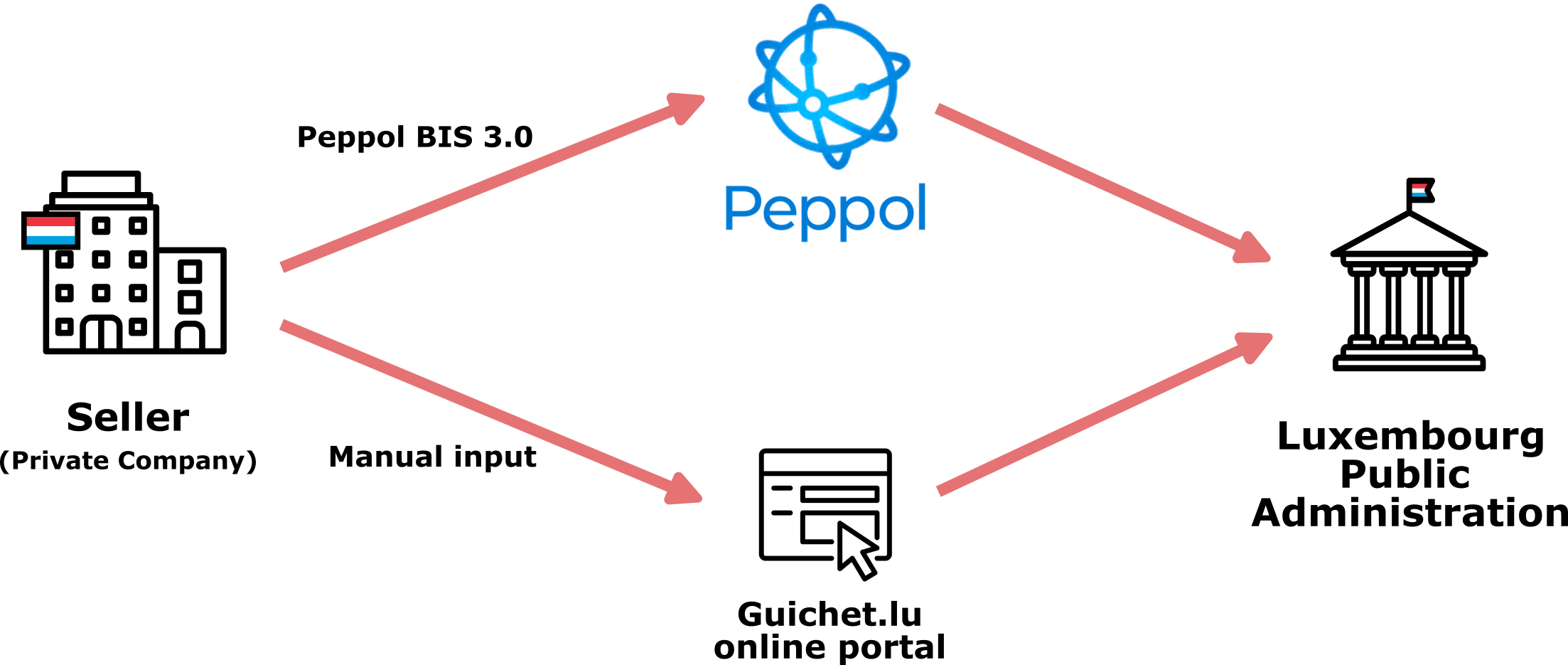
Suppliers are required to transmit invoices via the Peppol network using the Peppol BIS 3.0 format.
Alternatively, companies without a Peppol solution can submit invoices manually through the public portal Guichet.lu [↗︎]. On this portal, they can either upload invoices in Peppol BIS 3.0 or XRechnung 3.0 formats, or manually enter all invoice data to generate the invoice directly within the system.
Invoices must be archived for 7 years in most cases.
B2B E-Invoicing
There is currently no B2B e-invoicing mandate in Luxembourg, and no plans to introduce one in the near future, although the upcoming application of the ViDA directive could drive changes by 2030.
In the meantime, businesses can transmit B2B invoices in the following ways:
- Paper-based invoices
- PDF invoices with e-signature or complete audit trail
- Electronic invoices via EDI
Timeline
B2G E-Invoicing Mandate - Large companies
B2G e-invoicing is mandatory for large companies for all transactions with public administrations.
B2G E-Invoicing Mandate - Medium companies
B2G e-invoicing is mandatory for medium-sized companies for all transactions with public administrations.
B2G E-Invoicing Mandate - All companies
B2G e-invoicing is mandatory for all transactions with public administrations, no matter the company size
Latest E-Invoicing News in Luxembourg
European Commission calls for public input to shape the future of EU e-invoicing
E-Invoicing named key enabler in EU’s Single Market Strategy
Technical Details (B2G)
Technical guidance and specifications about e-invoicing in B2G Luxembourg are available on the official e-invoicing website of the government [↗︎].
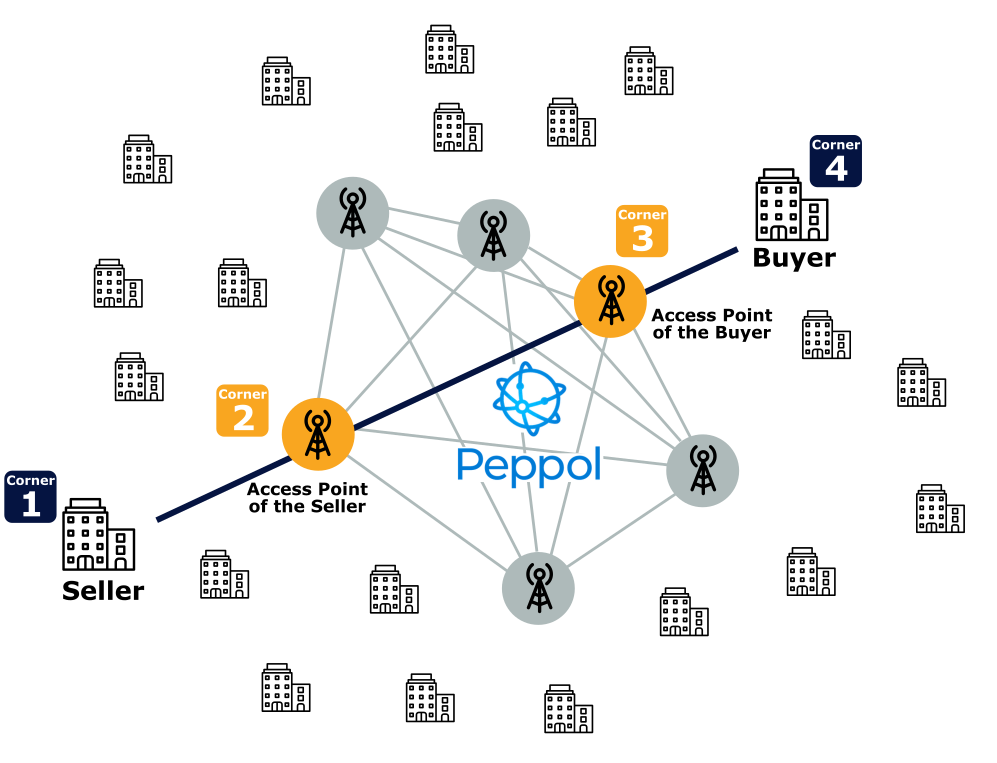
Electronic invoicing through the Peppol Network
The official electronic invoicing method in Luxembourg revolves around the Peppol network and the Peppol BIS 3.0 format, which is compliant with the European Norm (EN) 16931.
It is also possible to exchange XRechnung 3.0 invoices via Peppol, but they must be manually adjusted to include the Peppol identifiers of both the sender and the recipient in order to enable transmission through the network, as specified in the official FAQ [↗︎].
The list of public administrations [↗︎] capable of receiving invoices through Peppol, along with their identifiers, is regularly updated and currently includes nearly 800 entities.
Manual submission through Guichet.lu
For smaller companies not equipped with a Peppol solution, manual submission remains another authorized option, through a public online portal available at Guichet.lu [↗︎].
This portal allows companies to submit their invoices two different ways:
- Manual input of invoice data into a form, and the portal generates the electronic invoice himself
- Manual upload of a valid electronic invoice, either in Peppol BIS 3.0 or XRechnung 3.0 format
The Invoicing Hub Word
Luxembourg
Luxembourg has generally taken a cautious approach to e-invoicing mandates. While many European countries introduced B2G e-invoicing requirements earlier, Luxembourg only completed the rollout of its nationwide B2G mandate in 2022–2023 through a phased implementation.
A similar approach appears to be emerging for B2B e-invoicing. The forthcoming application of the ViDA directive in 2030 will introduce mandatory cross-border e-invoicing across the European Union, creating a natural opportunity for Luxembourg to extend e-invoicing requirements to domestic B2B transactions. Several European countries have already announced such plans as part of their broader digitalization strategies.
To date, however, Luxembourg has favored a pragmatic and business-friendly approach, avoiding aggressive timelines and prioritizing ease of adoption. This is reflected in its decision to base its B2G framework on the widely adopted Peppol network and the Peppol BIS 3.0 format.
Should Luxembourg introduce additional B2B e-invoicing obligations in the future, they would likely build on the same Peppol-based infrastructure, following a path already taken by many EU countries, including its Benelux neighbors Belgium and the Netherlands.
Additional Resources [↗︎]
The Ministry of Digitalisation is Luxembourg’s Peppol Authority
E-invoicing guidelines, FAQs and technical specifications
Online portal used for manual submission of B2G invoices
Official directory of worldwide Peppol-ready businesses
Entire set of official Peppol BIS 3.0 specifications
Get your Project Implemented
Gold Sponsor
A certified Peppol Access Point since 2014, Babelway connects companies to the Peppol network and converts data across any format (UBL, XML, EDIFACT, X12, PDF, JSON, CSV) and protocol (AS2, SFTP, OFTP, VAN). Trusted by 650+ customers across 26 countries, including two national governments, Babelway processes 600M+ messages annually with 99.99% availability.
Drag-and-drop transformations, transparent tiered pricing, automatic upgrades, and SOC 1, SOC 2, ISO 27001 and GDPR compliance make e-invoicing adoption simple.
Silver Sponsors
Advertisement
Latest News
New Country Coverage: Luxembourg
Norway’s e-invoicing mandate officially approved
billentis publishes its 2026 “Riding the Tornado” report on e-invoicing
Spanish B2B e-invoicing technical guidance published
Ireland’s e-invoicing mandate: what to expect by 2028
📩 Newsletter
Receive the latest e-invoicing news, directly in your mailbox, once a month.