Skip to content

Advertisement

InExchange Logo
Inexchange is a European e-invoicing and compliance provider with Nordic roots. As a certified Peppol Access Point, we connect more than 350,000 companies and process over 250 million invoices a year.

E-Invoicing in Sweden:
B2G Mandate & Peppol

Last update: 2026, November 2

Summary

Sweden has required suppliers to issue structured electronic invoices to public administrations since 2019. E-invoicing is also widely used in the private sector, despite the absence of a domestic B2B mandate.

B2G Transactions

Mandatory e-invoicing

Suppliers of the Swedish public administrations are required to send their invoices electronically, in compliance with the European Norm (EN) 16931. There is however no central platform, and the use of Peppol is highly recommended.

B2B Transactions

No e-invoicing obligation

No e-invoicing or e-reporting obligation applies to business-to-business transactions in Sweden, but adoption is already high, and Swedish authorities are currently assessing possible new obligations in anticipation of the 2030 ViDA requirements.

B2C Transactions

No e-invoicing obligation

No e-invoicing or e-reporting obligation applies to business-to-consumer transactions in Sweden.

Sweden

Table of Contents

What the Law Says

B2G E-Invoicing

E-invoicing is mandatory for B2G transactions in Sweden, with Peppol as the official recommendation.

E-invoicing has been used in Sweden for a long time. A first partial B2G mandate was introduced in 2008: all invoices sent to central public administrations had to be electronic.

The mandate was then extended to all public entities and all B2G transactions in 2019 under the Act (2018:1277) [↗].

There is no central platform. Instead, the mandate requires invoices to comply with the European Norm (EN) 16931, and the official recommendation is to use the Peppol network and the Peppol BIS 3.0 format. All Swedish public administrations are now registered in Peppol and able to receive invoices through this channel.

However, due to the long history of e-invoicing in Sweden, some legacy formats, such as EDIFACT, remain in use but are progressively being phased out [↗], reinforcing the recommendation to use Peppol.

Invoices must generally be archived for seven years.

B2B E-Invoicing

There is currently no B2B e-invoicing mandate in Sweden, but adoption is already high.

The use of both EDIFACT and the local Svefaktura format is widespread. More and more businesses are also using the Peppol network, while many rely on well-established service-provider networks.

Businesses remain free to choose how they exchange invoices. Available options include:

  • Paper-based invoices
  • PDF invoices supported by an e-signature or a complete audit trail
  • Electronic invoices (EDI, Peppol, …)

The framework may evolve in the coming years in light of developments across Europe and the upcoming EU ViDA directive. The Swedish Government is currently assessing the possible implementation of domestic B2B e-invoicing [↗].

Invoices must generally be archived for seven years.

B2C E-Invoicing

Sweden does not have a B2C e-invoicing or e-reporting mandate.

Companies may continue to issue business-to-consumer invoices and receipts through their usual channels, including paper invoices, PDF invoices sent by email and printed receipts.

Timeline

B2G e-invoicing - Partially mandatory

B2G e-invoicing became mandatory for all suppliers of central public administrations as early as 2008.

B2G e-invoicing - Fully mandatory

E-invoicing becomes mandatory for all B2G transactions with all public entities.

Peppol recommended for B2G

The Swedish government recommends to use the Peppol network and the EN16931-compliant Peppol BIS 3.0 invoice format for B2G transactions.

Some legacy formats phased out

Swedish authorities no longer recommends and supports some legacy formats for the public sector, reinforcing the Peppol recommendation.

2008
2019
2021
Jul 1, 2025

Latest E-Invoicing News in Sweden

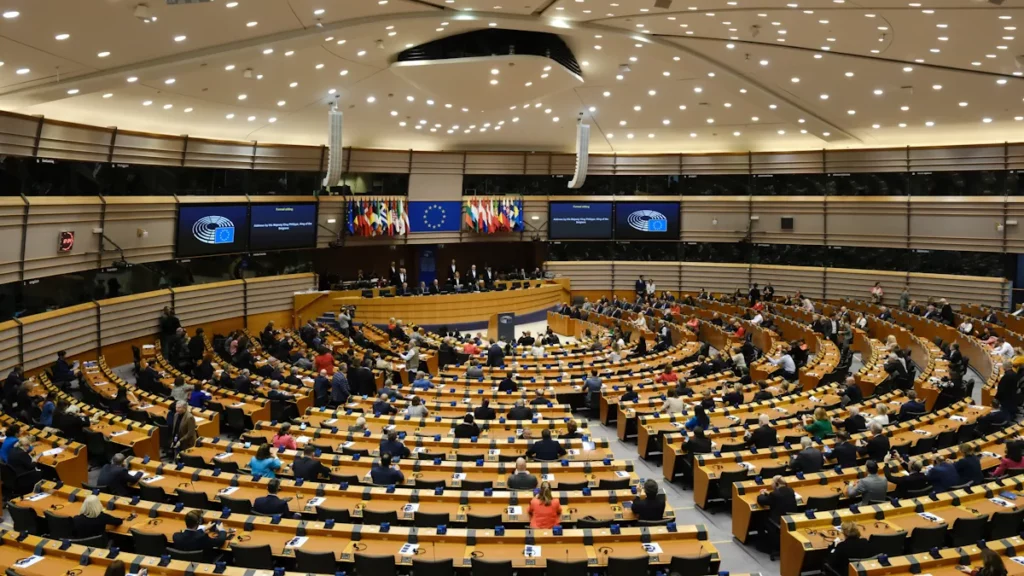
Photo of the European Parliament, gathered within the European Commission in Brussels, capital of Belgium

European Commission calls for public input to shape the future of EU e-invoicing

A “Reality Check” event and a public consultation launched by the European Commission aim to shape EU e-invoicing by gathering feedback.

Set of flags from around the world waving in the wind

EN 16931 update: the next step in e-invoicing is on its way

With the EU shifting from public e-invoicing mandates to full B2B, the EN 16931-1 update will arrive mid-2026 to raise compliance standards.
View from the seas of the waterfront of Stockholm, capital of Sweden

Sweden to assess implementation of domestic e-invoicing 

Sweden will evaluate until December 2027 whether to adopt domestic e-invoicing or strictly adhere to intra-EU ViDA requirements.

Technical Details (B2G & B2B)

E-invoicing was adopted early in Sweden and is now widely used across the country. No specific format or delivery method is mandated for all transactions, but Swedish authorities strongly recommend Peppol for B2G invoices, while traditional EDI remains popular for B2B exchanges.

Invoice content & format

Trading partners may agree to exchange invoices in any suitable format. Traditional EDI formats, such as EDIFACT and the local Svefaktura format, are widely used in Swedish B2B transactions.

However, these legacy approaches are gradually falling out of favour. In the B2G context, the Swedish authorities, through the SFTI initiative (Single Face To Industry), have progressively withdrawn their recommendation for certain legacy standards [↗].

Businesses may instead use the Peppol network, which is also now the officially recommended channel for B2G transactions. When Peppol is used, invoices are issued in the Peppol BIS Billing 3.0 format [↗], based on the European Norm (EN) 16931.

Peppol invoices are addressed using the recipient’s Peppol participant identifier, also known as its electronic address. In Sweden, this is generally a Swedish Organisation Number (Peppol scheme 0007) or a GLN (0088), depending on how the recipient is registered. The Peppol Directory [↗] can help suppliers identify registered recipients and the document types they are able to receive.

However, as e-invoicing remains voluntary for B2B transactions, businesses may also continue to exchange paper or PDF invoices, subject to agreement between the parties.

Invoice delivery

Electronic invoices in Sweden can be exchanged through a direct 1-to-1 connection configured between the parties. Businesses may also rely on established service-provider networks, which can route invoices between suppliers and buyers using formats such as EDIFACT or Svefaktura.

Businesses can opt to use the Peppol network, and connect through a Peppol Access Point. The network then routes the invoice to the recipient using its registered Peppol participant identifier.

The National Agency for Public Procurement (Upphandlingsmyndigheten) acts as Sweden’s Peppol Authority and oversees the national implementation of the network.

However, as there is no mandate, businesses are not required to use e-invoicing and may deliver invoices through any method accepted by the parties, for example by email as a PDF.

The Invoicing Hub Word

Sweden

Sweden and the Nordic countries have been pioneers of e-invoicing in Europe and globally. Sweden introduced its first partial B2G e-invoicing mandate as early as 2008, well before similar requirements became widespread elsewhere in Europe.

E-invoicing adoption is high across the country, including for B2B transactions. However, many early adopters rely on invoice formats that are gradually becoming obsolete. Peppol is becoming more prevalent and is now the official recommendation for B2G transactions.

The upcoming ViDA directive may accelerate this transition further. Swedish authorities are currently assessing the possible introduction of additional e-invoicing requirements ahead of the 2030 deadline.

Overall, Sweden is one of the world’s most mature e-invoicing markets, while still facing important milestones in the years ahead.

Get your Project Implemented

Gold Sponsor

InExchange Logo
E-invoicing has been part of everyday business in the Nordics for two decades. Inexchange brings that experience to companies across Europe, helping them send and receive e-invoices and stay compliant across formats, networks and national mandates, from Peppol and ViDA to local requirements.

As a certified Peppol Access Point since 2012, we connect more than 350,000 companies and process over 250 million invoices yearly. We serve enterprises, public organisations and software vendors, who integrate our services directly through a well-documented API.

Nordic by birth, European by design, built for the compliance landscape ahead.

Silver Sponsors

Contact us to learn about our sponsorship plans

Official Resources [↗]

National Agency for Public Procurement in Sweden, and Peppol Authority

Resources on Peppol published by Upphandlingsmyndigheten

Swedish initiative promoting digital & standardized e-procurement

Official directory of worldwide Peppol-ready businesses

Entire set of official Peppol BIS 3.0 specifications

Discover Additional Resources

An Iopole workshop on e-reporting for POS software, featuring a customer case study from Chift on cash register interoperability.
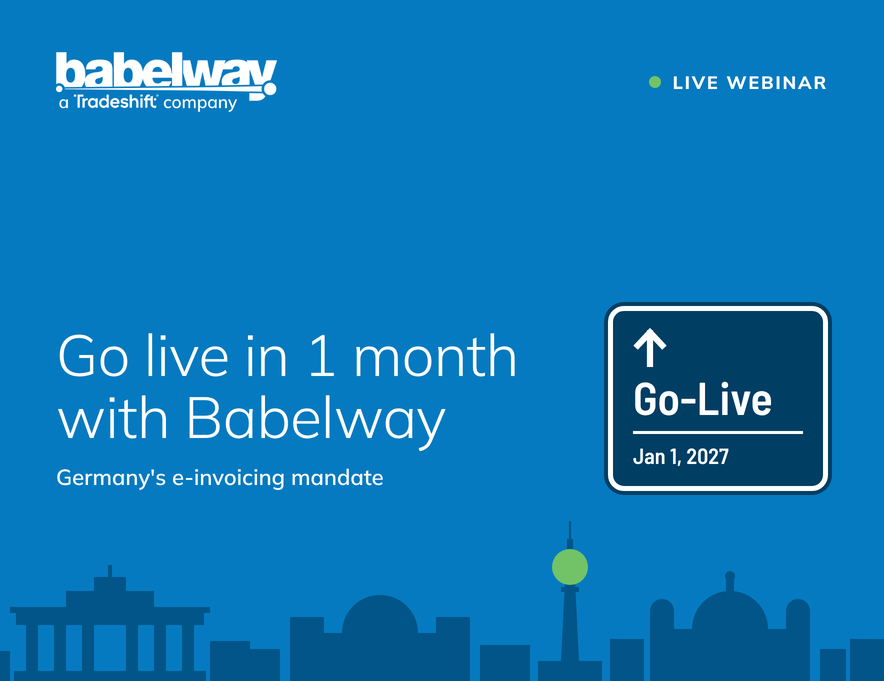
Watch this webinar for a practical, step-by-step plan to issue compliant e-invoices in Germany before the January 1, 2027 deadline.
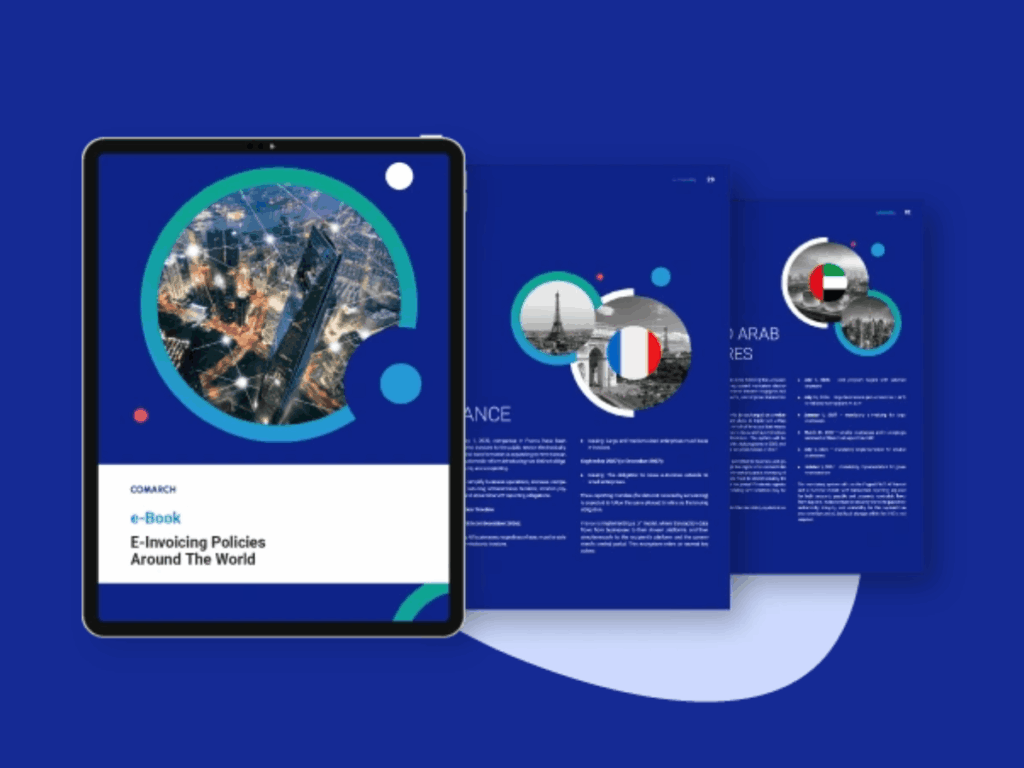
A 2026 Comarch eBook outlining global e-invoicing regulations, upcoming compliance mandates, and country-specific rules across 75 nations.

Advertisement

InExchange Logo
Inexchange is a European e-invoicing and compliance provider with Nordic roots. As a certified Peppol Access Point, we connect more than 350,000 companies and process over 250 million invoices a year.

Latest News

Photo of the scenic view, white walls and blue roofs of Santorini, an Island in Greece

Greece’s B2B e-invoicing mandate is now fully deployed

Greece completes the rollout of its mandatory e-invoicing framework and will introduce further E-Transport obligations from January 2027.

The Netherlands publishes preliminary guidance on 2030 e-invoicing mandate

The Dutch Government confirms the 2030 e-invoicing and e-reporting roadmap and launches public consultation on preliminary draft legislation.

Egypt’s e-invoicing mandate: understanding the ETA requirements

The Invoicing Hub now covers a 34th country: Egypt, with regular e-invoicing news & detailed country profile.

A first look at Belgium’s 2028 B2B e-reporting mandate

Belgium plans to introduce e-reporting from 2028, leveraging the Peppol network, while phasing out the annual customer listing obligation.

India expands e-invoicing requirements from January 2027

India expands its e-invoicing mandate to cover additional transaction types from January 2027, without changing its scope criteria.
Chatbot icon at the colors of The Invoicing Hub

Try me 🙂

I’m an e-invoicing  expert and I might just surprise you!

đŸ“©

Newsletter

Receive the latest e-invoicing news, directly in your mailbox, once a month.