E-Invoicing in Finland:
B2G Mandate, B2B Rules &
EN 16931
Last update: 2026, September 24
Summary
Finland requires structured e-invoices for B2G public contracts, while B2B e-invoicing remains voluntary by default. Additionally, businesses with an annual turnover above €10,000 have the right to request an electronic invoice from their suppliers.
B2G Transactions
Mandatory e-invoicing
B2G e-invoicing is mandatory since 2019-2020, and suppliers must send electronic invoices compliant with the EN 16931, but there is no central platform or required transmission method.
B2B Transactions
Voluntary e-invoicing, with a right for the recipient to request it
Companies are allowed to exchange electronic invoices in any mutually agreed format. Additionally, any company with a 10,000€+ turnover can request its suppliers to send e-invoices compliant with the EN 16931.
B2C Transactions
No e-invoicing obligation
No e-invoicing or e-reporting obligation applies to business-to-consumer transactions in Finland.
Finland
Table of Contents
What the Law Says
B2G E-Invoicing
Electronic invoicing is mandatory for all B2G transactions in Finland.
The requirement was introduced through the Act on Electronic Invoicing by Contracting Entities and Operators of Trade or Business (241/2019) [↗︎]. It first applied to central public administrations only from April 1, 2019, before extending to all other public entities from April 1, 2020.
Additionally, since April 1, 2021, the Finnish State requires B2G e-invoices to be compliant with the European Norm (EN) 16931, as confirmed in the State Treasury’s invoicing guidance [↗︎].
Suppliers may therefore use any invoice format compliant with the EN 16931, with the most popular choices being Finvoice 3.0, TEAPPSXML 3.0 or Peppol BIS 3.0.
There is however no central public platform for submitting B2G invoices. Suppliers must agree on an appropriate delivery method with their public-sector customer, typically through a third-party portal or the Peppol network.
Invoices must generally be archived for six years.
B2B E-Invoicing
Finland does not impose a general B2B e-invoicing obligation, but the recipient has a right to request it.
Generally, businesses may agree to exchange invoices in any format accepted by both parties, including:
- Paper invoices
- PDF invoices sent by email
- EDI, including established formats such as EDIFACT
- Structured electronic invoices sent through the Peppol network
The Act on Electronic Invoicing by Contracting Entities and Operators of Trade or Business (241/2019) [↗︎], which took effect on April 1, 2020, gives business recipients with an annual turnover exceeding €10,000 the right to request e-invoices compliant with the EN 16931 from their suppliers.
In this case, suppliers may use any invoice format compliant with the EN 16931, with the most popular choices being Finvoice 3.0, TEAPPSXML 3.0 or Peppol BIS 3.0 and agree on a delivery method with their customer.
Invoices must usually be archived for 6 years.
B2C E-Invoicing
Finland does not have a B2C e-invoicing or e-reporting mandate.
Companies may continue to issue business-to-consumer invoices and receipts through their usual channels, including paper invoices, PDF invoices sent by email and printed receipts.
Timeline
B2G E-Invoicing mandate - Central administrations
E-invoicing becomes mandatory for B2G transactions with state-level public administrations.
Wider B2G scope and B2B right to request e-invoicing
E-invoicing becomes mandatory for transactions with all public administrations.
Additionally, private companies with turnover >10,000€ can require their suppliers to issue EN 16931 e-invoices
B2G E-Invoicing compliant with EN 16931
B2G transactions now require electronic invoices compliant with the EN 16931
Peppol E-Ordering begins
E-ordering via Peppol starts being used in applicable public procurement contracts
Latest E-Invoicing News in Finland
EN 16931 update: the next step in e-invoicing is on its way
E-Invoicing named key enabler in EU’s Single Market Strategy
Technical Details
B2G e-invoicing is mandatory and invoices must comply with EN 16931, but Finland has no standardised delivery method, and public entities will typically ask to receive invoices through third-party e-invoicing portals or operators. B2B e-invoicing remains voluntary, unless an eligible recipient requests an EN 16931-compliant invoice.
Recipient identification
Finland offers no single central platform or network through which suppliers can submit invoices to their public or private recipients.
Instead, each recipient can choose its own delivery channel, often through a third-party e-invoicing operator.
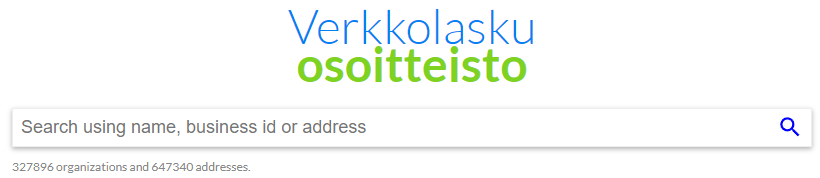
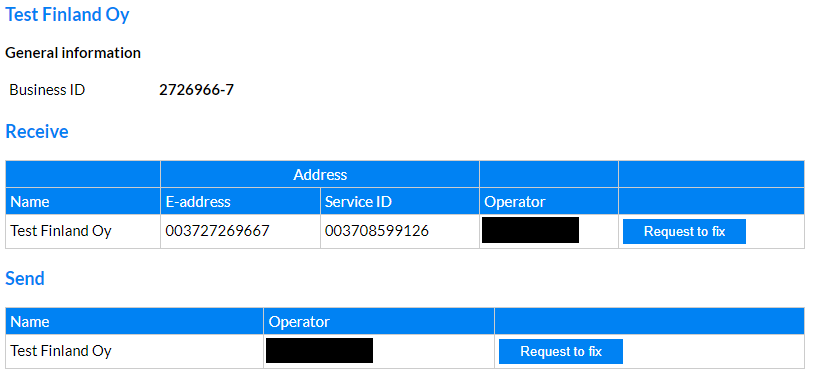
The Verkkolaskuosoite e-invoice address registry [↗︎] is Finland’s central reference point for finding these details. It currently lists nearly 400,000 recipient organisations, both public and private, together with their available e-invoicing addresses and operators.
It also lists recipients reachable through Peppol [↗︎], under the supervision of the Finnish State Treasury, acting as the Finnish Peppol Authority.
Suppliers can use the address registry to find out valuable information about their customers:
- Their business identifiers: “E-invoice address” and “Business ID” that they have to include into the content of their invoices
- The e-invoicing portal (“Operator ID”) that they have to submit their invoices to
Invoice format & EN 16931 compliance
E-invoicing has been in place for a long time in Finland, which has led to a number of invoice formats in use all over the country.
Where a structured electronic invoice is required, whether for B2G transactions or at the request of an eligible B2B recipient, it must comply with the European Norm (EN) 16931 and contain the required data.
The following e-invoice formats are the most commonly used in Finland:
- Finvoice 3.0 (specifications [↗︎]), a format used primarily within the Finnish banking network, where banks exchange e-invoices between their customers
- TEAPPSXML 3.0 (specifications [↗︎]), a format developed and used by Finnish e-invoicing operators
- Peppol BIS Billing 3.0 (specifications [↗︎]), the standard format used for invoice exchanges through the Peppol network
Manual e-invoicing options
Not all suppliers have their own e-invoicing capabilities, particularly smaller or occasional suppliers.
Suppliers invoicing a Finnish central government agency can create an e-invoice manually and free of charge through the options identified in the Finnish State Treasury’s “Invoicing the State” guidance [↗︎]:
Access to those portals requires an invitation from the relevant government agency.
For B2B exchanges, some e-invoicing providers also offer manual-entry solutions, although their availability and conditions vary by provider and recipient.
Beyond E-Invoicing: E-Ordering
Many Finnish companies and public administrations are already connected to the Peppol network, so the government moving forward on this topic is not a surprise.
Since April 1, 2024, Peppol e-ordering [↗︎] has been progressively introduced in applicable State procurement contracts. The aim is to make it standard practice in suitable agreements, although it does not currently constitute a universal legal mandate.
It means that, when required by their contracting public customer, Finnish suppliers will have to be able to receive & process purchase orders via Peppol, as well as sending back order responses (via Peppol again) to the buyer.
And then, of course, the supplier must send an electronic invoice, as described in the previous sections about B2G.
In 2026, the Finnish State Treasury consulted stakeholders on the future development of electronic business documents, including Peppol e-ordering messages. The consultation update [↗︎] highlights several key points:
- Peppol procurement-message usage remains limited in Finland.
- Stakeholders were divided on whether its use should be supported through legislation.
- The options considered ranged from broader public-sector obligations to central-government requirements for suitable procurements, or continued market-led development.
- No new legislative project or mandate has been adopted as a result of this consultation.
The Invoicing Hub Word
Finland
Finland, along with all the Nordic countries, has been a pioneer of e-invoicing in Europe and even in the world. Companies in Finland started using the Peppol network in 2008 and the government introduced mandatory B2G e-invoicing in 2019-2020, with strict adherence to the EN 16931 standard from 2021.
Finland also introduced an interesting new B2B obligation in 2020: any company with a turnover of more than 10,000 € can require its suppliers to send e-invoices. This is an important policy change and a great adoption driver, but it can be demanding on suppliers who are not e-invoicing-ready yet.
Fortunately, all these years of active e-invoicing promotion by the government led many Finnish companies to implement e-invoicing solutions, which makes Finland one of the most advanced countries in that domain.
And the story does not stop there as e-ordering is the next step: since April 2024, Finland has progressively introduced e-ordering in applicable State procurement contracts, although it does not yet constitute a universal B2G mandate.
Get your Project Implemented
Gold Sponsor
As a certified Peppol Access Point since 2012, we handle all infrastructure, compliance, and regulatory updates, allowing our partners to focus on their core products.
With 300+ integrated software partners serving over 300,000 businesses and processing 12+ million transactions monthly, we deliver secure, scalable solutions for B2B, B2C, and B2G invoicing needs.
Silver Sponsors
Official Resources [↗︎]
Public entity supervising the e-invoicing mandates in Finland
Official guidelines on how to invoice public administrations
Peppol Authority in Finland
Official directory of Finnish businesses and how to invoice them
Finnish non-profit organization aiming to help businesses in their digital endeavours
E-invoicing & e-invoice address service guidelines
Finnish Finvoice 3.0 format specifications maintained by Finance Finland
Finnish TEAPPSXML 3.0 format specifications maintained by TietoEVRY
Entire set of official Peppol BIS 3.0 specifications
Related Resources
Advertisement
Latest News
Slovakia proposes latest adjustments and an extended grace period
VeR expands the conversation around B2B e-invoicing
KSeF penalty grace period to be extended until end 2027
XRechnung 4.0 draft published: preparing for EN16931:2026 adoption
The Netherlands shares plans for mandatory B2B e-invoicing and e-reporting
📩 Newsletter
Receive the latest e-invoicing news, directly in your mailbox, once a month.